Saturday, 22 October 2016

Is there any good modern Horror out there?

Reflections from a Young Movie-Goer


In reference to my last piece on Robert Eggers' The Witch, in which I claimed that cinema was in need of more good horror; I partially take that back....


Kill List (2011, dir. Ben Wheatley)

Despite what others might say; I would class this as horror. It both breaks and revitalises the genre, creating something chillingly authentic. Also check out A Field in England (2013) and Sightseers (2012). Each film Ben Wheatley makes is utterly original and innovative, delving deep into the human psyche without ever leaving the audience behind. I'm not even going to begin to describe the plot because its best watched with a pair of naive, unsuspecting eyes. 


Antichrist (2009, dir. Lars von Trier)

Willem Dafoe and Charlotte Gainsbourg play a grieving couple who retreat to a cabin in the woods for a vacation (echoing Don't Look Now) and bizarre things start to happen. The first in Lars von Trier's "Depression Trilogy" (followed by Melancholia and Nymphomaniac), its easy to file Antichrist under "showy pretentious rubbish", but that would only validate its provocative brilliance. Like most other good horror, the real monsters are inside your head, its simply a matter of how this can be communicated with film that reveals the director's true genius. All art is essentially a psychological experiment, this gives horror a fast track to digging up and exploiting our deepest fears and anxieties. Those who down-rate Antichrist for its showiness forget that they are also participating in the film just as much as those behind the screen. 


Under the Skin (2013, dir. Jonathan Glazer)

Perhaps my favourite film from the last decade, if not of all time, Under the Skin is both a visceral and a sublime experience. The plot is minimal but never leaves you in want of more; Scarlett Johansson plays an alien disguised as a human driving around Glasgow, picking up men from the streets to harvest for her mothership. I say "harvest for her mothership", but in the sequences where this happens, anyone's interpretation is as good as mine. It is slow, hypnotic and visually stunning. Check out my review of it from January. Even better, watch it for yourself and try to work out who the true monster is.


Troll Hunter (2010, dir. André Øvredal)

With the falling costs of CGI and decent film-making equipment, smaller production companies are now able to realise and bring to life visions wholly unimaginable a couple of decades ago. Back then, Jurassic Park (1993) was a big-budget A-list film on the cutting edge of technology. Its incredible how something like Trollhunter can create something just as effective on a fraction of the budget. Furthermore, its a film completely rooted in Norwegian folklore and culture. It would be awesome to see more films like this from across the globe that integrate their own cultural and folkloric elements into the story, seeing as we're already pretty familiar with America's. 


Berberian Sound Studio (2012, dir. Peter Strickland)

Starring Toby Jones as a quiet English sound engineer who goes to Italy to work on recording the sound for a Giallo film, Berberian Sound Studio is a psychological meta-horror (for lack of a better term) where all the scares are implied rather than shown. Its slow moving, claustrophobic and alienating albeit in a very subtle way, perhaps too subtle for most horror fans. 

This is not to mention the likes of Cabin in the Woods (2012), It Follows (2015), Creep (2014) or Drag me to Hell (2009), but you get the idea. 

There have been at least a handful of films over the last decade or so that have utilised the horror genre to brilliant effect. However most if not all of these are independent films. Aside from something like Cabin in the Woods, most don't receive the full recognition that they should in comparison to what usually passes for Horror recently. We're too used to defining horror by those exhaustive, executive-driven franchises like Saw and Paranormal Activity, or those god-awful soul-crushing remakes such as the 2003 version of The Texas Chainsaw Massacre. The real problem is what we think constitutes a horror film. We're stuck with these dry expectations; jump scares, zombies, gore, things jumping out and making snarly faces. We're stuck with the same characters, the same situations, the same places, the same effects, and they've lost all their genuine scare value. Its given the genre an image problem, and a chance for executives to churn out sequel after sequel and remake after remake. In spreading awareness of good horror, perhaps change can come from below, from the audience who truly have more power over the industry than the executives.

Most of the films mentioned can be found on Netflix, Amazon Prime or BFI player.


Friday, 14 October 2016

The Witch (2015, dir. Robert Eggers)

Reflections from a Young Movie-goer


   The jump-scare is perhaps one of the worst afflictions of cinematic horror today. Countless films recently have forgone the often emotionally-complex slow burn of atmosphere building to instead churn out a series of uniformly dull, predictable shocks with no inherent reward, value or insight to them. The need to make a quick buck drives this trend; jump-scares are easy, cheap and, to a lot of people, enough for the price of admission. This is problematic for horror as it doesn't give the producers any incentive to risk making more complex, thought-provoking pictures, on account of the fear that they won't perform at the box-office. However, this is a vicious circle as the average cinema-goer has been conditioned to expect cheap, superficial thrills from horror. When they are confronted with a film that doesn't seem to provide these, they won't bother with it. This means that when indie films like The Witch (2015), devoid of jump-scares and full of ideas, get mainstream attention, its something to be quite excited about.

Robert Eggers' directorial debut, describing itself as "A New England Folktale", centres on a family of Puritans in colonial New England who are expelled from their plantation over what seems to be differences in religious belief. The family moves to the edge of a forest, where they build a new home and a farm to live on. Frequent, lingering shots of the vast landscape and forest, almost completely absent of human life save for the family, create a sense of almost overwhelming isolation, almost sublime in its quietude. The youngest of the children, Samuel, mysteriously vanishes while under the care of the eldest daughter, Thomasin. What follows is a dizzying, paranoid descent into the delusional minds of a fanatical family on the edge of absolute wilderness, and the persecution that follows. There are few cheap thrills, but what the film suggests rings true in a deeply disturbing way.

It's essentially a story about stories, and this is where the film's real genius is. Elsewhere people have claimed that it should have been marketed as art-house rather than horror. Perhaps this would have better accommodated some people's expectations, but it would deprive The Witch of the full power of its central thesis. It shares this self-awareness with Jennifer Kent's The Babadook (2014), another recent horror film that fully utilises the conventions of the genre to illustrate its message. (I won't spoil its brilliance by deconstructing it here, but I will say that it goes further than The Babadook in its clever usage of horror.) In an industry divided amongst the axes of art and entertainment, films that seem to transcend this rigid apparatus stand out as perhaps the most authentic. And while The Witch isn't the most transcendent of these authentic visions (as evidenced by its leaving many baffled), it makes a brilliant case for the potential of the genre in cinema today.

Using horror to such effect, it rivals the likes of Michael Haneke's The White Ribbon (2009), another film examining religion's effects on family and community. Perhaps it surpasses it through its very contrivance, the idea behind it satisfies immensely. In terms of production, the film is also exceptional. The acting, while at first seeming a bit stiff, stuck up in the drama of its world, progresses and culminates into some breathtaking scenes. Performances all round become spectacular, especially Anya Taylor Joy as Thomasin and Ralph Ineson as the father (his low, rattling northern accent fits the scenery perfectly). Both lighting and camerawork bring out the full creepiness of the landscape and the sheer primitive struggle of the period, creating ripe conditions to examine the humanity in unnerving depth. Its usage of ye-olde dialect and language accentuate the sense of alienation, the distance of characters from one another and the audience. Its a clever technique, which puts the audience right into the middle of the paranoia; what we see is as fantastically equivocal as what the characters see. Its interesting in comparison to Aleksei German's Hard to Be a God (2013), which achieved a similar affect through a completely different, more visceral means. Rather than creating a claustrophobic, stream-of-consciousness-type atmosphere, with characters leering down the lens at you, The Witch's audience involvement requires a level of intellectual participation.

The only real negative aspect of the whole experience ironically stems from the limitations of the genre. This isn't really a problem inasmuch as a hindrance of the film reaching a state of pure poetry. Genre will always be prosaic and this can hold it back from reaching total cinematic sublimity. As long as it's horror, one will always know roughly what to expect. Compare this to a Tarkovsky film, which is pure poetry, the viewer can be carried away into lofty, spiritual reaches. The Witch is first and foremost a statement and as such it can never reach the open-ended wonder that some other brilliant films do. This isn't a large price to pay for what we get instead, its barely even an actual qualm. What it is, though, is a comparison of genre to non-genre cinema, or perhaps comparing poetry to prose. Cinema needs both, and its particularly in need of more innovative, masterful prose as we get from the likes of good horror, especially The Witch.

Monday, 26 September 2016

American History X (1998, dir. Tony Kaye)

Reflections from a Young Movie-goer


   More often than not, films with "American" in their title seem to be aiming for some sort of grandiose parable status. American Beauty, American Psycho, American Sniper, American Pop, all of these films are to some extent concerned with evoking something about the American condition, something which transcends the film itself. Part of it is inherent within the very use of "American" in the title, it makes this particular aspect of the film central. This is more than apparent in Tony Kaye's American History X (1998), which aims directly at the weighty issue of race relations and racism in the USA.

Told in a non-linear, fragmentary style, aided by the use of black and white photography to indicate past events, the story follows two brothers involved in the neo-nazi movement in Los Angeles. Edward Norton gives an immense performance as the older brother, Derek, who after being released from prison renounces his membership of the movement, only to discover his younger brother is becoming increasingly involved in it. The younger brother, Danny, played by Edward Furlong, is in trouble at school after submitting a paper about Mein Kampf, and has been tasked by his principle with writing a paper about his brother titled "American History X". The film then dots around, switching between black and white; charting in a non-chronological sequence Derek's path to racial hatred, activities as a gang leader and rehabilitation in prison, and colour; the events of the evening which involve Danny attending a neo-nazi party against Derek's wishes. The film's heart is in the right place, but there are some very obvious missteps in its approach which hold it back from being something far greater.

The fragmentary mode of story telling can result in some ingenious narrative structures, not to mention some sublime, filmic moments. Take for example Mike Leigh's Mr Turner (2015), by portraying only several carefully selected episodes from J. M. W. Turner's later years and using a kind of impressionistic realism that Leigh does best, he evokes almost perfectly not just the mind of the artist, but the era in which he lived. Furthermore, what we are not shown is just as important as what we are; the aftermath of something momentous can hold just as much power than the something momentous itself. Though this is not always the case, every film which employs a fragmentary method needs to be aware just how much it gives its audience. Ironically, much like its subject matter, American History X manages to be completely fascistic with its material, leaving very little room for contemplation or emotional depth. Too often, it feels as if the film is demanding its audience's emotions without properly earning them. As a result, there's one or two moments which fall completely flat in their intentions. Ideally, rather than taking any of these bits out, the whole film needs a least another hour of material to space out the scenes it intends to be more arresting. Either this, or it re-structures the narrative to create situations which allude to what is instead show.

The few effective moments of the film, though, reach much greater heights than the rest. Central to these are Edward Norton's performance which attempts to dissect the mentality of disaffected suburban youth, and almost succeeds if it were not for the heavy handedness of the narrative. The characters he's surrounded by resemble the scenes themselves, lacking the essential nuance and complication for real drama to occur. This is especially damaging to the film given the effort it puts into examining race relations. Unlike other films which tackle the same subject matter, for instance Boyz n the Hood (1991), to which it pales in comparison, it feels itself too worthy to spend time establishing characters or atmosphere. It hurries to get to the point without bringing its world to life first.

American History X isn't a bad film at all. It's just that there's a much more sophisticated, nobler film beneath the ineffective clutter of scenes that it actually is. A film only glimpsed momentarily, almost entirely lost if it were not for Edward Norton's performance which saves it from mediocrity. However, it does show a genuine intent towards analysing a very real and problematic mindset. Its a film that wants to make a splash, it wants to present on film an ugly side of America and show the humanity that hides underneath. Yet overmanipulative scene after overmanipulative scene consistently undermine its good intentions, and instead of humans we get simplistic ciphers giving a simplistic explanation for a complicated problem.  


Friday, 16 September 2016

Dead Man (1995, dir. Jim Jarmusch)

Reflections from a Young Movie-goer


   The Western is an interesting genre. Using the cowboy era, a relatively short span of American history, the Western has managed to mythologise the rugged individualism that sits at the core of American ideology. They are, in some sense, the fairy tales of the US, their macho heroes are not characters so much as ideals. And in the best of the classic Westerns, this ideal is opened up and scrutinized on a deeper level. Take, for instance, John Wayne's character in John Ford's The Searchers (1956), he is the image of rough, American masculinity, fearlessly pursuing his kidnapped niece across a dangerous, unforgiving landscape. But at the same time he is psychologically scarred, a veteran of the Civil War (having fought for the Confederacy), and on his quest he is as much driven by feelings of hatred for the Native Americans than by love for his niece.

The Western not only has the power to construct the American ideal, but also to deconstruct it. Ford doesn't necessarily condone Ethan's (Wayne's character) actions and motivations, but simply puts them up on screen for the audience to view from an apathetic distance. This apathy makes the Western increasingly existential, its process of deconstruction and introspection more self aware. Against an unpopulated and belittling backdrop, and alongside the various struggles and atrocities that accompany the growing pains of a nation, the Western's of today are a vastly more political and philosophical affair. Take for instance Quentin Tarantino's Django Unchained (2012). As a film-maker, Tarantino deals mostly with already established filmic types and ideas, and nowhere is this more evident than in Django, taking staples of the Western and putting them into new configurations; the liberated slave becomes a cowboy. But whereas the intentions of Django are more political, films like Jim Jarmusch's Dead Man (1995) are philosophical.

In Dead Man, Johnny Depp plays William Blake an accountant who journeys by train westward to the small town of "Machine" following the promise of a job at a metal works. Upon arrival, he finds the job has been given to someone else and he is driven out at gunpoint by the company's owner, John Dickinson (played by Robert Mitchum). With no prospects and very little cash left, Blake goes home with a former prostitute who sells paper flowers. In the morning, her ex-boyfriend surprises them in bed and, aiming for Blake, accidentally shoots her. While he is shocked, Blake nervously reaches for a gun and shoots him, missing twice before finally hitting him. Blake realises the bullet that killed the woman is deeply embedded in his chest (thus making him a Dead Man).The ex-boyfriend turns out to be John Dickinson's son, who dispatches three bounty hunters to track him down and bring him back dead or alive. While on the run, Blake meets a stoic Native American called Nobody who believes that he is the famous poet of the same name. What follows is a film that is all at once dark, gritty, hilarious, slow and incredibly dreamlike. Depp starts out looking more like Buster Keaton, but after he is confronted with his own mortality he slowly undergoes a transformation into something a lot more like Clint Eastwood's man with no name.

Like Tarantino, Jarmusch draws heavily from culture. Rather than just pop culture and filmic types, though, he expands this to include culture itself, and draws two or more together in various ways to create authentic, new experiences. This is most apparent in films like Ghost Dog: Way of the Samurai (1999), which fuses Japanese philosophy with a Hip Hop soundtrack to construct a new American cultural formation on film. In the case of Dead Man, though, Jarmusch takes Native American spiritualism and applies it to the filmic elements of the Western. The result is something that blends poetry and existentialism, meaningless death with fate. This is to put it simply, though, the film is rather more a melting pot of ideas and references which puts mood and inventiveness before plot and characters. As a result, it can appear increasingly jagged around the edges at times, feeling either daring and new, or overblown and vapid (or even both, for that matter). The vignette structure, fading to black after each scene, alleviates this somewhat by making the film seem more like a set of dreamlike fragments.

In comparison to the polished prose of John M. Maclean's Slow West (2015), Dead Man is pure poetry. Neil Young's spare, electric guitar soundtrack is repetitive, sometimes irritating in its recycling of sounds, but it feels almost like a mantra, collapsing the events of the film into a single, discordant memory, like a dream had the moment before awakening. The film's ending could easily loop back to the beginning, and play in an infinite cycle. This is the essence of the film's Native American spiritualism, thoughtfully meditating against an absurdist backdrop of death and deadpan humour. Alongside this is a plethora of Blakean imagery, riffing on the themes of innocence and experience, apparent in Depp's transformation and a scene in which he lies down next to a dead fawn. Here the American frontier is not a place of growth and prosperity, but death and decay. Life in this strange, deadly land can best be understood through the outlook of Nobody.

Jarmusch utilises a high sense of artifice, particularly in the town of Machine, not only to amplify the film's dreaminess, but also as cultural reference points for the audience. Drawing attention to these stereotypes, the film is much more effective in conveying its philosophy. The rugged individual is no longer the upright, American ideal, but an amoral, nameless cultural hybrid faced with his own mortality. Justice and honour aren't so important as an animalistic awareness of the chaos of being. Reason has no place in the West, neither on the vast plains nor the unruly frontier towns. The Western and its myths might have been dissected and scrutinised many times before, but Dead Man manages to do it to far more interesting effect.

It meanders, providing hits and misses along the way, but there's no doubt that the audience is left with a series of thought-provoking, poetic images that will resurface in the mind many days later. The cast and their performances are both exact, Gary Farmer's Nobody is endlessly expressive and enigmatic, while Depp is the exact reverse, stony-faced yet transparent, together they provide a highly watchable and compelling on screen duo. In his utilisation of the Western genre and its tropes, Jarmusch has confronted not just political ideas about the US, but philosophical ones about the very nature of being. This might seem a grandiose way of putting it, but the power of the dreamlike storytelling simply speaks on a more human level than those it shares a genre with. It might delight and dazzle some, others will be left aggravated and baffled, but surely if anything this is an immunisation against mediocrity, film's deadliest disease.


Thursday, 11 February 2016

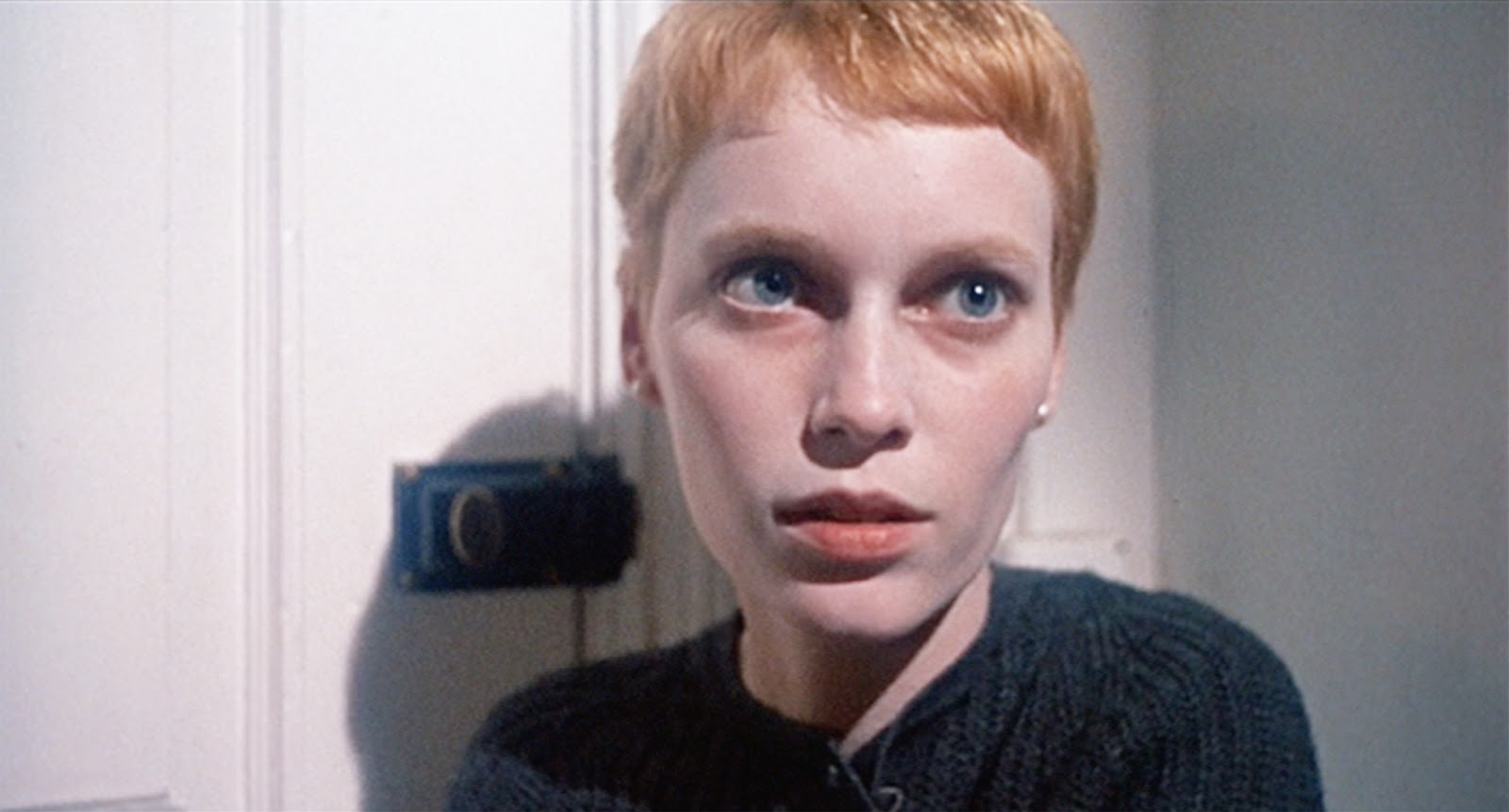
Rosemary's Baby (1968, dir. Roman Polanski)

Reflections from a Young Movie-goer


     After watching and loving Roman Polanski's 1965 psychological horror Repulsion, I was more than excited to see his more well known film Rosemary's Baby. Its a title frequently thrown around when the subject of “best horror” comes up, along with the likes of The Shining, The Exorcist and The Texas Chainsaw Massacre, all three of which I thoroughly enjoyed. Horror is perhaps one of the most versatile (and definitely visceral) genres in cinema, as well as one of the most accessible. Its role is to play on the common-held fears of mankind. Therefore it is one of the most inclusive modes of storytelling. One could argue that there are many other types of film which do a similar thing, but, to me, horror is the most profound. Horror can be loud or quiet, terrifyingly abstract or dreadfully real, political or personal. It gives the film maker an excuse to explore their inner-most selves without seeming self-indulgent. The more we explore the dark and depraved world through the lens, the more we can see its depth and beauty in real life. Furthermore fear is active as an emotion, it doesn't need an enormous intellect to be understood but it can lead one into deep thought. Horror is also a response to every other genre. Take Ben Wheatley's Kill List, for instance, which starts out as a socially realistic domestic drama before taking a complete turn into horror. Rosemary's Baby does a similar thing but with much more nuance.

Its plot follows a young couple, Rosemary played by Mia Farrow and Guy played by John Cassavetes, who move into an old apartment in New York city. A friend of theirs, called Hutch, warns them against moving in to the apartment and tells them about its sordid history. Their neighbours include a nosy and eccentric elderly couple whom they unintentionally start socialising with. The elderly couple start involving themselves a lot in the young couple's lives, giving Rosemary a charm containing “Tannis root” and, on one night, a dessert to eat when they're planning on conceiving a child. After noting that the dessert has a strange undertaste, Rosemary passes out and dreams she is raped by a devil as all of her neighbours, standing naked, look on. From here on a number of complications start to arise. As the due date, June 28th 1966 (hint hint hint) approaches, her health deteriorates and she falls into madness, learning that her neighbours are possibly witches who wish to take her baby for Satanic purposes.

The film works as a horror because it keeps the audience questioning Rosemary's speculations and her perspective; Is it going to be a psychological or a supernatural horror? I find films almost always scarier when the viewer is uncertain as to what they are actually scared of. This is something I've explored in other reflections (see Videodrome and Under the Skin reviews). Though I didn't find it nearly as scary or meaningful as Repulsion, which is far more visceral, raw and psychologically shocking as a horror film. The eeriness of Rosemary's Baby lies in its absurdism, the bizarre lurking beneath the every day. But, overall, it has far less effect today than the other's punchy realism. Its higher budget and bigger story roots it more in the 60s, and this makes many of the dramatic and comic aspects of the plot fail because of their datedness. Yet, with many of the narrative tropes of horror combined with the aesthetics of a drama, it has an impressive sophistication in its plot, drawing more on the eery rather than the scary. This is what gives it its nuance in comparison to something like Kill List, which channels one genre then the other.

There are many similarities in the progression between Repulsion to Rosemary's Baby and Jean Cocteau's two films The Blood of a Poet and Orphée. The director has explored similar themes, but their first is a lot more weird and visceral (almost more so for its age and lower budget), while the second has a bigger budget, a wider story and is more rooted in the canon of popular film. I think that both films for both directors are good in different ways, but in both instances I got more out of their first films.

But there were several parts to Rosemary's Baby I really enjoyed, which all stick out against the datedness of some of the other parts. The use of space and lighting in all the interior shots was incredibly atmospheric, adding more to the sense of eeriness than most of the characters. The visual motif of one room viewed from another. The sound of a ticking clock. All of these were utilised to similar effect in Repulsion, and are developed perfectly here. Polanski's approach to shooting interiors must have influenced Stanley Kubrick in The Shining in some way. Another performance I really liked was Guy's, which paralleled the uncanniness of the apartment through both his distance and his familiarity. The notion of the bizarre lurking underneath the everyday is most expressed through the apartment and Guy, drawing attention to the status of marriage and the home. Polanski is really exploring how these can turn against the woman, as well as questioning maternal duty. There is an interesting subtext to the film, which makes repeat viewings much desirable. At least Rosemary's Baby has this over Repulsion, which one can understand more completely the first time around.

Usually I'm not too keen on remakes, unless they are also reinventions. I was sad to hear that Nicolas Roeg's masterpiece Don't Look Now is being remade, which, if this were to happen, would lose a lot of its power. Yet, I feel as if I would welcome a remake of Rosemary's Baby, if put in the right hands. This is mainly because I felt the effectiveness of the plot against its datedness was jarring in places. As I have said before, some films attain a vintage quality with age where their oldness becomes charming. But in the case of this film, I think it tarnishes some of its desired effect. The most recent film I could think of which bears some resemblance is Lars Von Trier's Antichrist, which is definitely worth checking out for those interested in seeing something that explores similar themes of madness, marriage and maternal grief. Its also quite scary.

Trailer: https://www.youtube.com/watch?v=PewtQsgN5uo

Tuesday, 9 February 2016

Slow West (2015, dir. John Maclean)

Reflections from a Young Movie-goer


    I somehow managed to watch three other films in my break from writing on here; Man Bites Dog, Jean Luc Godard's Le Mepris and What We Do in the Shadows. For the first film I was only half-alert, but the other two I sat down and watched and enjoyed greatly. I won't do a full review on either of them now, but might reflect on them in future (I think Le Mepris might be one of the best films I've ever seen). I had Roman Polanski's Rosemary's Baby next on my schedule, but wasn't able to watch it last night. I did, however, watch something which I was just as interested in, Slow West.

I'm not overly-familiar with the Western genre, the extent of my watching includes The Searchers, No Country for Old Men, Django Unchained and bits of old Westerns on TV. Only one of these did I really enjoy; The Searchers. The latter two, while I appreciated them and really like some of their respective directors' other work, left me cold. I felt that the primary problem I had with both films was their actual attempts at the genre, despite my own inexperience with it (or perhaps because of my own experience with it). The only Tarantino films I've truly enjoyed were Reservoir Dogs and Pulp Fiction. I feel that his trademark is making style look like substance; if you don't enjoy the style, there won't be any substance. The three other Coen Brothers films I've seen: Fargo, The Big Lebowski and O Brother, Where Art Thou? have all been excellent. I think the main problem with No Country, which isn't really a problem with the film itself, was the fact that I'd previously read the book by Cormac McCarthy and preferred it a lot more. I'm not a believer in the “books are always better” argument and I think that film adaptations create something new altogether. But McCarthy's style complemented the plot a lot better than the Coen Brothers'. The Searchers feels a lot more daring and innovative as a western, compared to the other old westerns I'd seen bits of. It's dark and complex in its themes while epic and picturesque in length, and the modern viewer can revel in all its vintage western wonder. The other two films, though, tread similar ground in terms of morality, bringing not enough new to the screen.

Based on this trend, I didn't think I'd find much to like in Slow West, John Maclean's first full length feature starring Michael Fassbender and Kodi Smit-McPhee. The plot is simple and, as the title suggests, slow; Smit-McPhee plays a 16 year old Scottish boy who travels west across America in search of a girl he loves, who also emigrated from Scotland with her father. He runs into a bounty hunter, played by Fassbender, and pays him for protection. The bounty hunter soon discovers that the girl and her father are wanted and are being tracked by another gang of bounty hunters. It balances traditional western tropes with an offbeat, indie sensibility which fit together near-perfectly. This quirky sensibility allows it to approach the western tropes with a humour and a depth one would usually associate with European films. Needless to say, I was pleasantly surprised.

Slow West feels like it innovates its genre. The diverse range of ethnicities we see; Congolese, Scottish, Swedish, Native American (not to mention the bounty hunter's mixed heritage) drifting across a dangerous and largely unconquered land makes it feel truly wild, exciting and primordial. Along with an interesting score, the locations (its actually shot in New Zealand) bring a fairy-tale beauty to the mix, adding to this whole sense of genre-revitalisation. This is the main difference between it and films such as Django Unchained, it only takes from the Western genre what it really needs to. When watching Django, I felt that Tarantino was trying to cram in everything he knew about Westerns, which made it seem more like a facsimile than anything. Slow West, on the other hand, is a lot more lean and refined. Lasting only 84 minutes, its slow but not sprawling, and the mastery of its story telling means it never seems gimicky or self-indulgent.

Ultimately, its a story about two universal elements; love and death, which it handles with all the mythicising absurdism of a western. But it has an exotic freshness and black humour which summon up many, many names before the likes of John Ford. But, above all, it engages the viewer on an emotional level, something which neither No Country for Old Men or Django Unchained did. Overall, it is this quality, with its fairy-tale simplicity, that makes all of the film's other innovations truly shine. I would like to see more films like Slow West in the future. Another film which I imagine to be just as innovative is A Girl Walks Home Alone at Night, tagged as the first "Iranian Vampire Western", although I'm guessing it innovates in a completely different way. Despite my inexperience in the genre and my dislike of half the films I've seen from it, I would still say I have a lot of time for the Western.


Monday, 1 February 2016

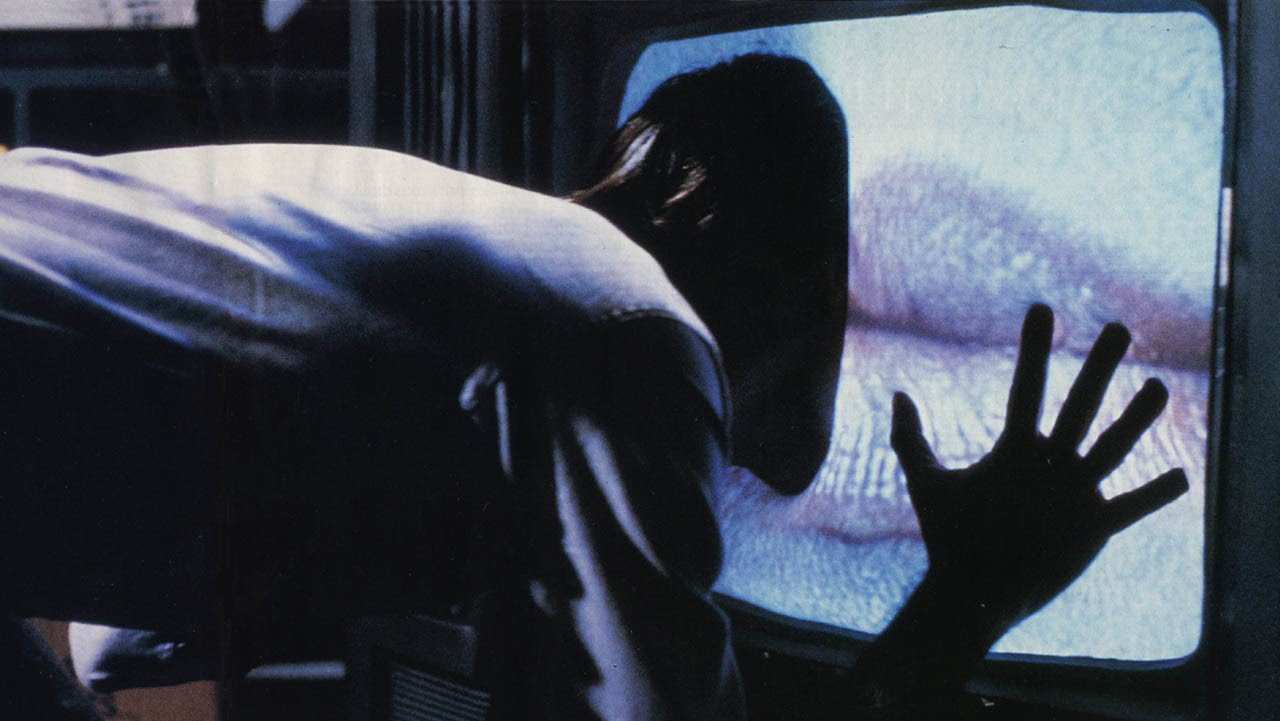
Videodrome (1983, dir. David Cronenberg)


    David Cronenberg's filmography is a mostly unexplored area for me. I've always meant to watch a lot of his films, especially his adaptations of Don DeLillo's 'Cosmopolis' and J. G. Ballard's 'Crash', books I rate very highly. The one film of his I have watched, however, is another adaptation of another book I really enjoyed reading; William Burroughs' 'Naked Lunch'. The themes and tonality of these three books shaped a lot of my own thinking and writing. I felt that if I was inspired by these novels as well then I would find a lot of interest in Cronenberg's work. His blurring of science fiction, horror and, to some extent, comedy, heavy on ideas as well as having a decent amount of body horror fascinated me. I'm surprised its taken me this long to actually get round to watching another. I chose 'Videodrome' for this list because, to me, it seemed to have the perfect balance of body and psychological horror, whilst placing its ideas at the forefront.

'Videodrome' follows the story of a CEO, played by James Woods, of a small television station that broadcasts softcore pornography and extremely violent programmes, he argues on a talk show near the beginning that the station relies on its sensational programming to stay afloat. He discovers a programme called “Videodrome”, apparently broadcast from Malaysia, that features victims getting brutally tortured and then mutilated. Interested, he attempts to track down the producers of “Videodrome”, only to be led down a psychedelic rabbit hole where “his” reality becomes indistinguishable from frequent, and often gruesome, televisual hallucinations. The film descends into a madness from which it never recovers. I fully expected there to be another twenty minutes on the third act, tying up all the loose and unexplained ends. That the film had the audacity to end so (arguably) openly, shows that there's a real vision behind the camera, giving the film a sort of raw anger which is entirely justified in its rationality. The blend of sci-fi and horror as well as its partial silliness remove any notion of pretension, leading one to expect a clear cut ending. And one can only really appreciate the power Cronenberg has over his own resolution.


 'Videodrome' came out in 1983, a time when a moral crisis in society arose out of the controversial “video nasty” and exploitation film genres. Cronenberg deals with this controversy head-on, crafting a film that is all ideas. It has all the catch-phrases and hypotheses of a philosophy, i.e. “Long live the new flesh” and “The television screen is the retina of the mind's eye”, and these make it endlessly fascinating and re-watchable. With similar “video nasties” lurking around the corners of the internet and a screen-reliant culture, the horror of 'Videodrome' feels as relevant today as it would have on its initial release. Furthermore it is a “horror” that fits my criteria of the genre as its all about human ideas, and ones that affect us all. The genius of the horror is the fourth-wall breaking, self-aware quality it has. The viewer is watching 'Videodrome' on a screen as James Woods watches a different but equally (if not a lot more) grotesque “Videodrome” on another screen. The difficulty he has in distinguishing reality from fantasy is an exaggerated metaphor for the difficulty those who want to censor exploitation films have in distinguishing the fantasy of the films from their own reality. Even though it was originally censored upon release, this is ideally what Cronenberg would have wanted.

It is through these psychological aspects that 'Videodrome' gets its body horror right. Gratuitous violence and gore are only truly justified in horror when they make a point, as they do in this film. Its as if Cronenberg has found a perfect equilibrium between not just psychological horror and body horror, but also style and substance. Watching it reminded me a lot of another visionary stylist; David Lynch. Both directors have their trademarks, both are similarly frequent in their output and both dance around the edges of horror. Cronenberg can be described as sci-fi, horror, comedy, but he is none of those things before his own unique style, and the same is true of Lynch. Yet, I feel as if I have much more reason to listen to Cronenberg because he is a lot less self indulgent than Lynch, who delights in being elusive. 'Videodrome' works with its own internal rationality, its as if Cronenberg wants his audience to understand it, as if he has a point to make. Whereas Lynch is a true surrealist and would never let his films be confined to rational arguments. Cronenberg feels grounded in literature about ideas, while Lynch is grounded in surrealist imagery. 'Videodrome' is far leaner and punchier than anything I've seen from Lynch. This isn't necessarily a bad thing on Lynch's behalf, but in the case of 'Videodrome' it feels totally like it gets straight to a point and doesn't waste the audience's time.

Sometimes this lean, raw energy can overshadow the mainstream credibility of the film, but I found these apparent flaws to really heighten its tone. Its rough around the edges, but all the more fun for it and shining when it gets to the really punchy images. Even the outdated, prosthetic effects have a sort of vintage charm which only contributes to the Cronenberg style. In an age of CGI, practical special effects and old school gore seem ever more like some sort of grotesque labour of love for the film maker. For all the appeal in the datedness of its style, 'Videodrome' still speaks volumes today and is completely pertinent in its substance. I look forward, in future, to watching every other film in Cronenberg's rich back-catalogue.


Reminded me of: Altered States, The Matrix, Jacob's Ladder